PPF cost · reviewed July 2026
PPF Cost (2026): Paint Protection Film Prices by Coverage
Paint protection film costs about $1,500–$3,500 for a full front in 2026. Price PPF by coverage and car size, see what full-car runs, and weigh DIY vs pro.
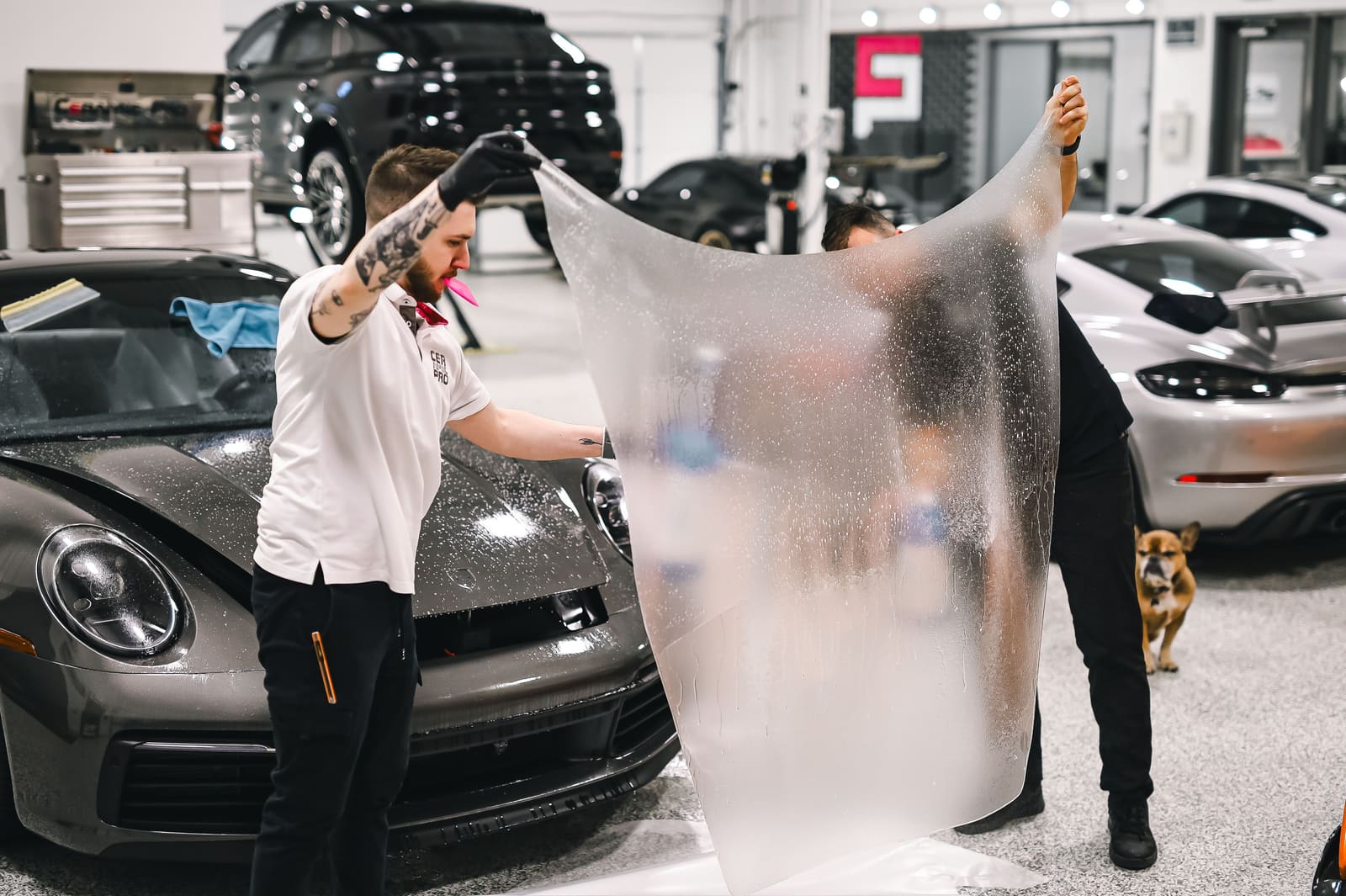
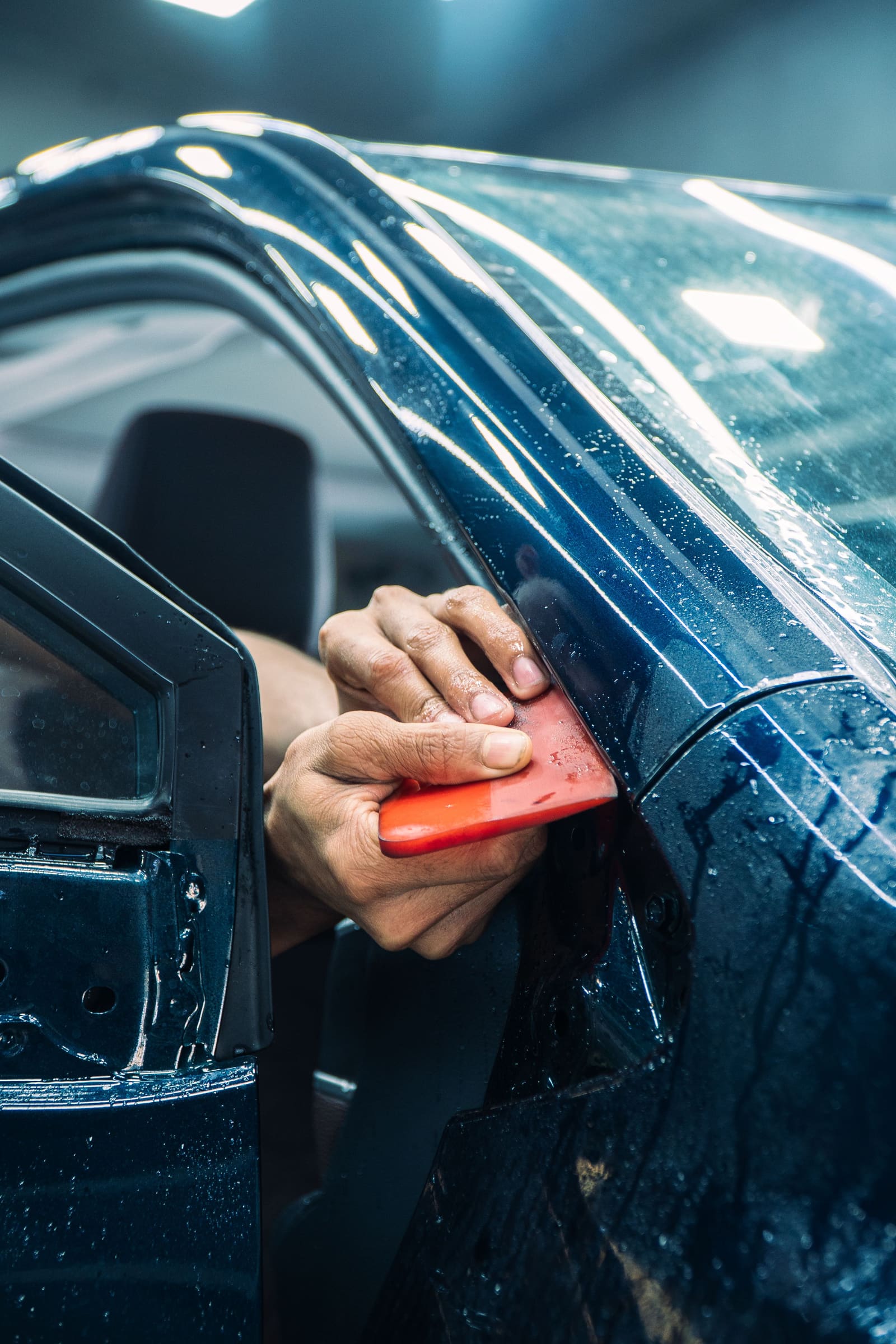
Jump to the calculatorPPF starts as a big, featureless sheet. The install is cutting and tucking it to a panel's exact shape without a visible seam. Photo: Pexels.
Estimate your paint protection film cost
Pick your vehicle and tier. The estimate updates as you go. No email, no quote form.
Estimated paint protection film cost
– –
Most pay around – for a full-front install.
How this estimate is built
Pro install, parts + labor. Costs reviewed July 2026. Your real quote will vary by shop and vehicle.
Paint protection film, “PPF” or a “clear bra”, is the only product on this site that actually stops rock chips. It’s a thick, clear, self-healing urethane film that gets cut to your panels and takes the highway abuse your paint would otherwise eat. That’s why it costs more than a coating: it’s physical armor, not a finish enhancer.
Quality PPF is built from TPU, thermoplastic polyurethane, not the PVC vinyl used for color-change wraps. That material choice is why the two products age so differently even though they both start as a roll of film: TPU’s flexibility is what lets it conform to curves without an installer fighting it with a heat gun, and it’s why a good PPF install can be warrantied for a decade while a comparable PVC wrap is typically rated for a third of that. It’s also softer and more self-healing by nature, which is the whole point of paying more for film over a wrap on the same panel.
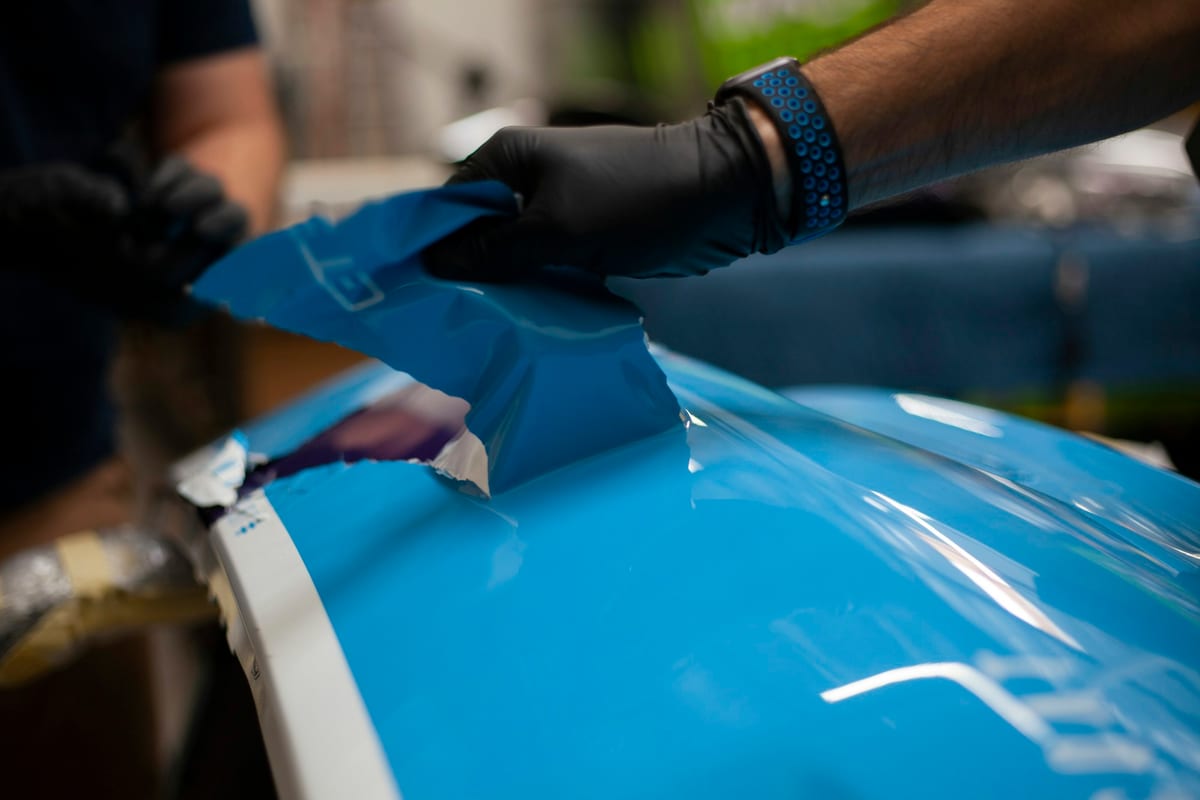
Price comes down almost entirely to coverage. A partial front, bumper, mirror caps, a strip of the hood, is the entry point at roughly $600–$1,500 and protects the panels that get hit most. A full front adds the whole hood, both fenders, and the headlights for about $1,500–$3,500, and it’s the most common choice for someone protecting a new car. A full-vehicle wrap covers every painted panel and runs $4,500–$8,000 or more, especially on a big SUV or truck with more area to cover.
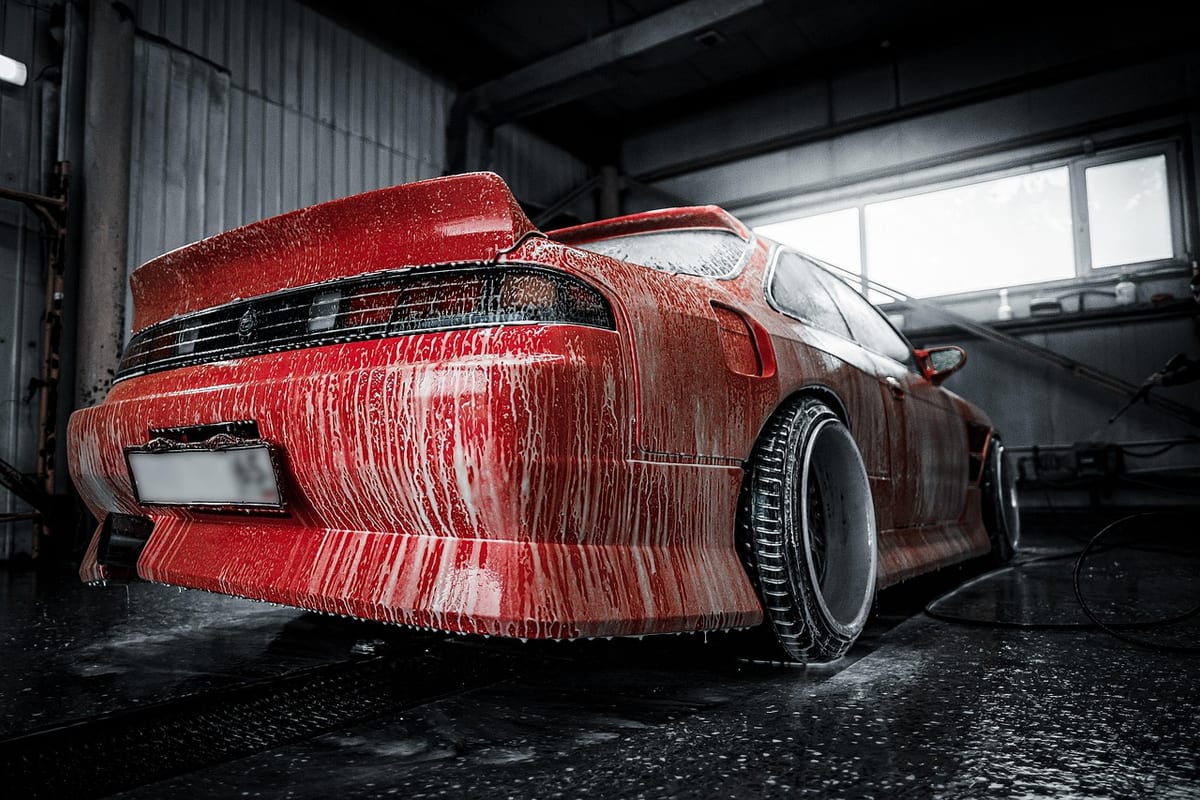
The thing to compare between quotes isn’t the film brand on the brochure, it’s the install. Good PPF is tucked and wrapped around panel edges so there’s no visible film line and nothing for dirt to creep under. A cheaper shop that lays film flat and trims at the edge will be faster and cheaper, and it’ll show. Ask to see their work.
Most reputable shops today cut panels using pattern software rather than freehand, XPEL’s Design Access Program is the widely used example, drawing from a library of well over 80,000 vehicle-specific patterns so the film is plotter-cut to the exact shape of your bumper or hood before it ever touches the car. That precision cutting is credited with cutting install time dramatically compared to hand-cutting on the vehicle, and it removes the guesswork (and the razor-blade-near-your-paint risk) that comes with freehand trimming. A shop using pattern software isn’t automatically better than one that hand-cuts well, skilled installers still finish and tuck every edge by hand either way, but if a quote seems unusually fast, ask whether they’re working from a plotted pattern or cutting on the car; it explains a lot about both the price and the risk of a stray blade mark.
That self-healing property is worth understanding before you pay for it. Quality PPF isn’t a coating on top of the paint, it’s a physical urethane layer roughly 190 microns thick (about the width of two sheets of paper), with an elastomeric topcoat that actually reforms itself when it warms up, in direct sun, after a warm-water rinse, or even from a heat gun. Light swirl marks and small scuffs physically flow back smooth on their own. It’s not magic against a real rock strike, but it’s why a two-year-old film still looks new while bare paint next to it has picked up chips. Top-tier film like XPEL’s Ultimate Plus line is warrantied for a full 10 years against yellowing, cracking, blistering, and delamination, not just “looking good,” those are named, specific failure modes the manufacturer is on the hook for. A cheaper, unbranded film sold on price alone usually carries no meaningful warranty at all, so ask exactly what’s covered and for how long before comparing two quotes on price.
How to spot a bad install before it’s too late
Most PPF failures aren’t the film’s fault, they’re the installer’s. A few things to check on any quote or finished job: ask to see actual photos of edge-wrapped work, not stock photos from the film manufacturer. Look closely at panel edges, hood, fenders, bumper, for a visible line where the film stops; that means it was cut flat and trimmed rather than tucked and wrapped, and dirt will work its way under that edge over time. In the days after install, watch for “silvering,” small trapped air pockets that give the film a frosty, milky look in certain light; a few tiny bubbles during the first day or two of cure is normal, but widespread silvering or lifting within the first couple weeks points to bad prep or a rushed job, not bad luck. And treat the lowest quote with suspicion rather than relief: an installer who cuts corners on decontamination or tuck time now is the same installer who’ll have you back in a year paying to have it redone, at which point the “savings” are gone. A shop with liability insurance, a real portfolio, and a written warranty on both the film and the labor is worth the premium over one that’s just cheap.
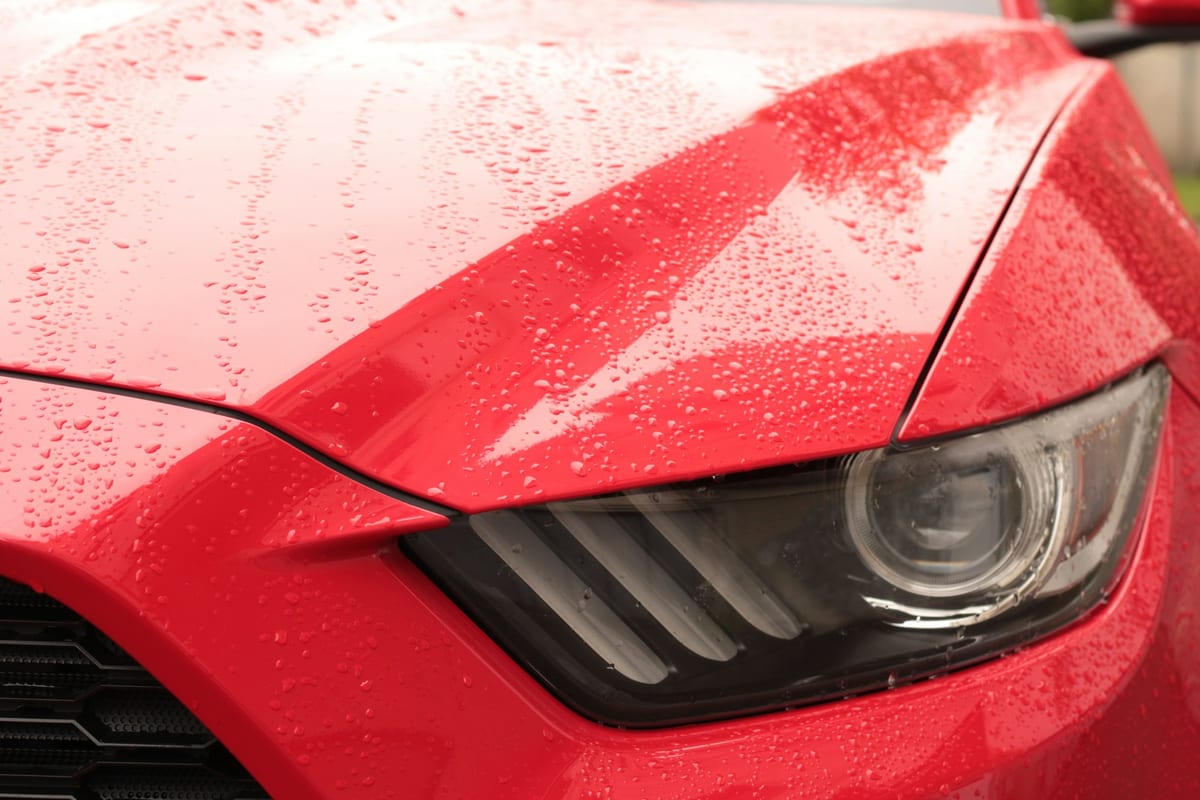
Use the calculator for your coverage and vehicle, then check the DIY-vs-pro panel. Small pre-cut kits are a reasonable home project; the full front end is not. Pair PPF on the front with a ceramic coating elsewhere and you’ve covered both jobs, impact up front, gloss and easy washing everywhere.
What moves the price
| What changes the price | Effect on cost |
|---|---|
| Coverage | A partial-front clear bra is $600–$1,500; full-car is $4,500–$8,000+. This is the biggest lever by far. |
| Vehicle size and shape | Trucks, SUVs, and cars with deep curves need more film and more careful cutting, raising labor. |
| Film quality | Premium self-healing films with strong warranties cost more than economy film but resist yellowing longer. |
| Pre-cut vs bulk-cut | Software-cut kits are faster; hand-cut edges wrap behind the panel so no film line shows, and cost more in labor. |
| Installer skill | Tucked, edge-wrapped installs from an experienced shop are worth the premium over a film that lifts at the edges. |
DIY or hire a pro?
Full-car PPF is a job for a pro with a heated bay and years of practice, bad film traps dirt, lifts at the edges, and looks worse than bare paint. Pre-cut kits exist for small areas like the bumper or door cups, and a patient DIYer can manage those. For the whole front end, hire it out.
- Time
- A long weekend per area
- Skill
- Advanced, wrapping edges cleanly is genuinely hard
- Worth it?
- Tough to match a pro. Best for budget touch-ups, not the full job.
Budget DIY alternatives
As an Amazon Associate, Detailing Cost earns from qualifying purchases.
- Done in a controlled shop, not your driveway
- The result you're paying for, with a workmanship warranty
- No wasted product or do-overs if it goes wrong
Get two or three quotes. The cheapest is rarely the one to pick for paint protection film.
Is paint protection film worth it?
On a new car you'll keep, full-front PPF is the one protection product that pays for itself, it takes the rock chips your hood and bumper would otherwise eat on the highway. On an older car with existing chips, or one you'll sell in a year, it's harder to justify the full price.
Worth it if you…
- Just bought a new or nearly-new car
- Commute on highways or gravel with lots of front-end exposure
- Have a dark or premium paint where chips show badly
- Plan to keep the car long enough to use up the film's life
Skip it if you…
- Drive an older car that already has chips and wear
- Will sell or trade within a year
- Only want easier washing, a coating does that for far less